
Campaign Overview
Practice Scale is the company of Dr. Obinna Nwobi, a vascular surgeon with more than 20 years in practice who owns an independent outpatient clinic in Central Florida, outside the hospital system. He built Practice Scale to show other physicians how to do what he did: use AI to handle the marketing, admin, and financial side of a practice so a doctor can stay independent without becoming a full-time marketer. The front door to the offer is a free private community for physician builders.
The challenge was the audience. Physicians are one of the hardest groups to reach in B2B cold email. They are time-poor, protected by gatekeepers, saturated with vendor outreach, and reflexively skeptical of anything that reads like marketing. Practice Scale also had no case studies, no member counts, and no testimonials to lean on — because the community was new. What it had instead was the single credential this audience respects: a founder who is still operating on patients. Lead Gen Jay's job was to build an outbound motion that put that credential in front of the right doctors and got out of its own way.
Key Metrics
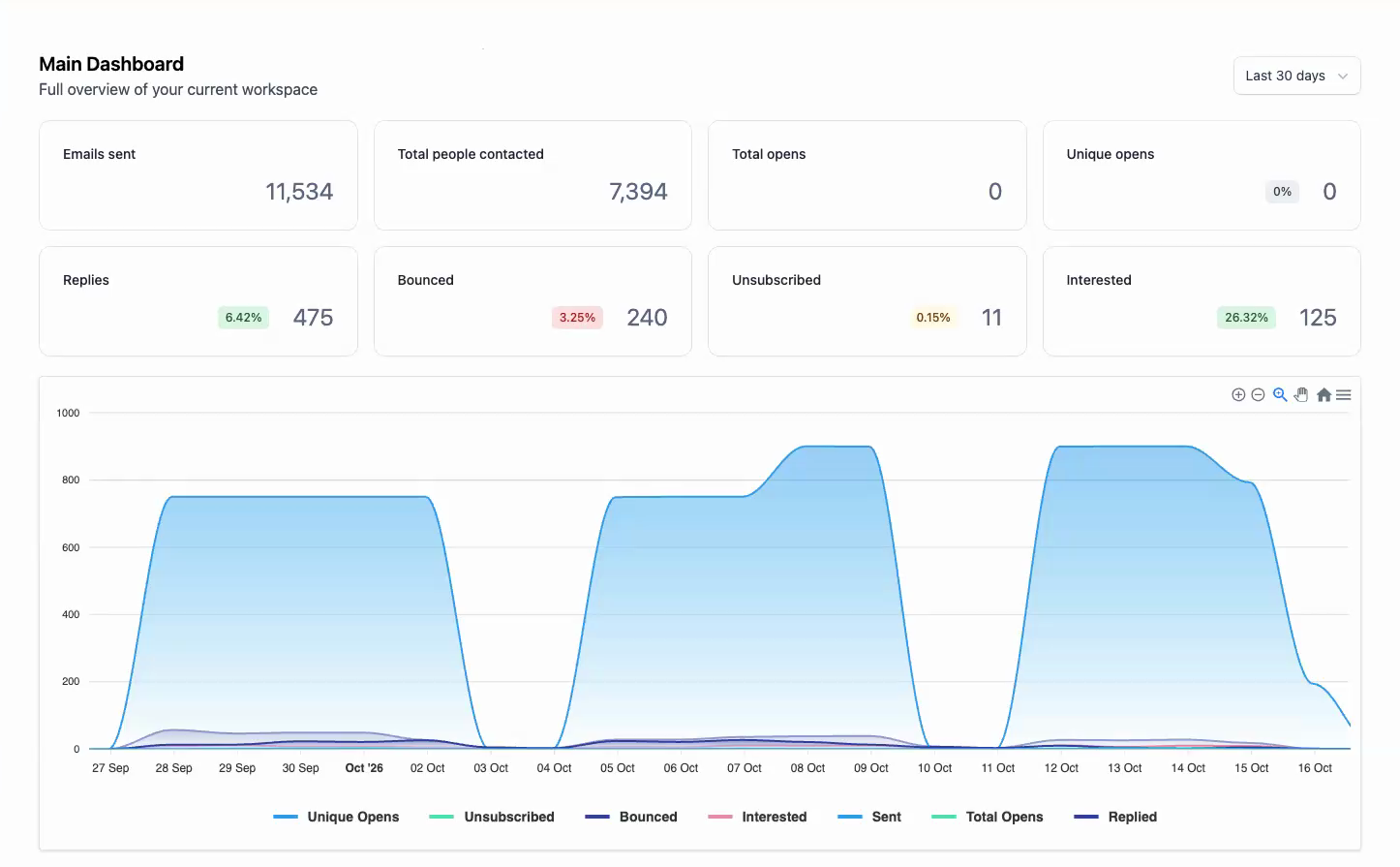
- Emails Sent: 29,034
- Practice Owners Contacted: 15,714
- Total Replies: 251
- Interested Physicians: 42
- Interested Rate: 16.73% of replies
- Unsubscribes: 9 (0.06%)
- Spam Complaints: 0
- Infrastructure: 50 mailboxes, 17 domains
Forty-two interested physicians is the headline, but the number that explains the campaign is the interested rate of 16.73 percent against a physician audience with no prior relationship to the brand, no proof assets, and no name recognition. Across nearly 30,000 emails, the campaign generated just 9 unsubscribes and zero spam complaints — a deliverability record that reflects deliberate infrastructure choices made from day one.
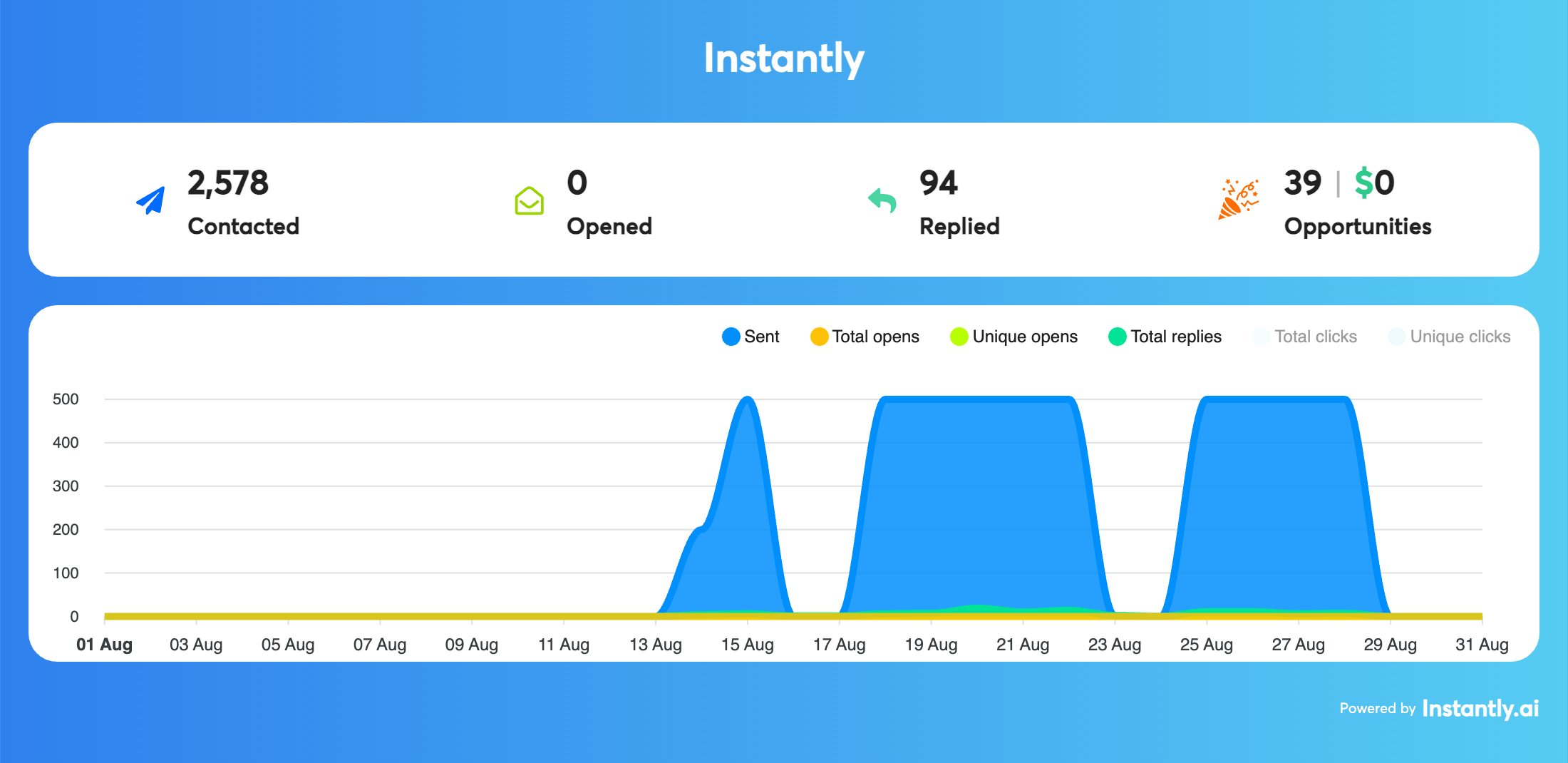
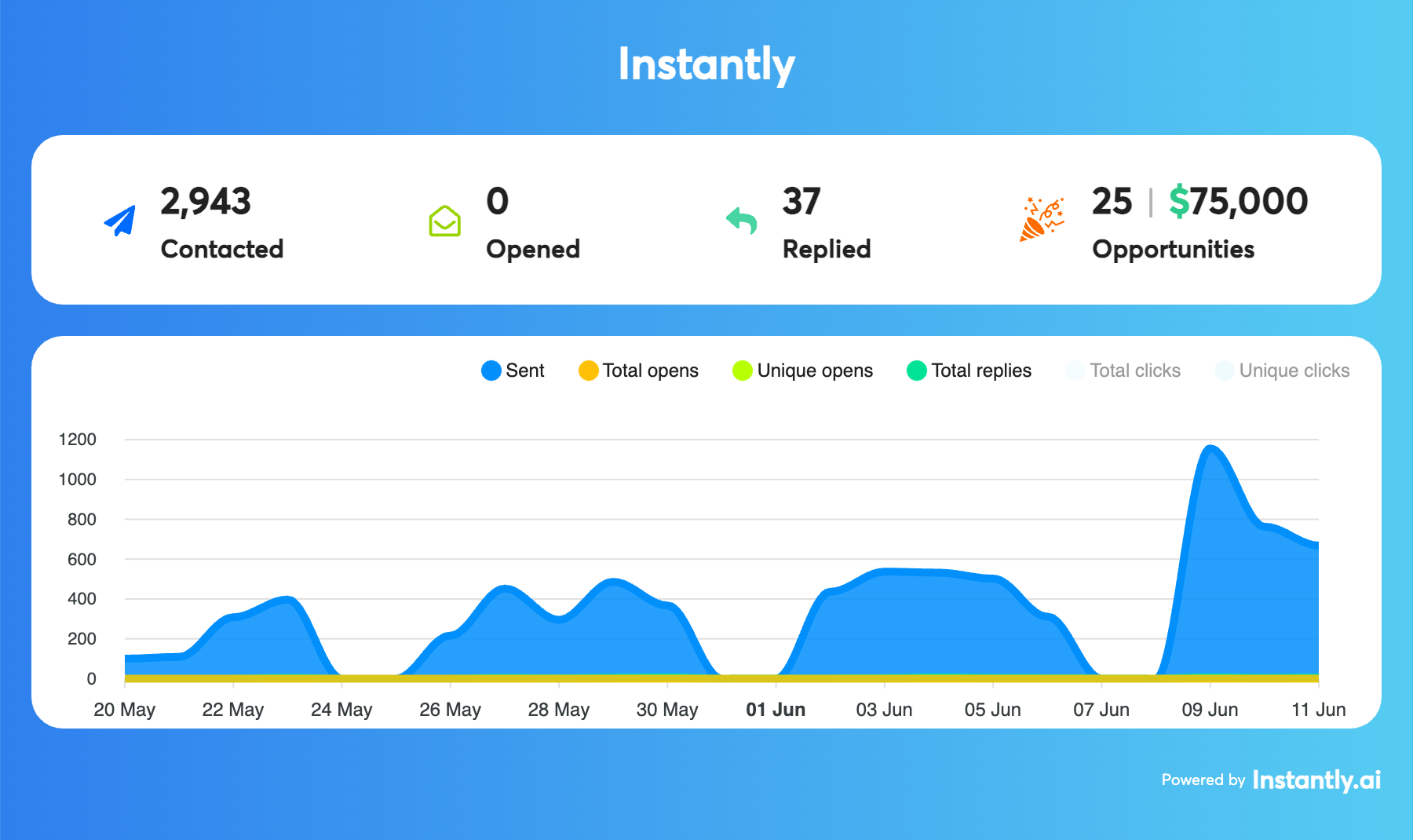
Performance also improved with every version. The current build, rebuilt in August with tighter copy, a sending configuration fix, and a move to pre-warmed sending accounts, is the best-performing campaign in the account: reply rate up 32 percent to 4.62 percent, bounce rate down 34 percent to 2.55 percent, and a higher positive rate per lead than any prior version. It has reached only about 1,500 of its audience so far, meaning most of its volume is still ahead of it.
Best-Performing Campaign
The strategy behind Practice Scale's campaign was built around one core principle: let the data pick the audience rather than assuming who the buyer was. The offer could plausibly appeal to two different types of buyers — physician owners and non-physician practice owners such as nurse practitioners, PAs, and non-clinical entrepreneurs running med spas and IV clinics. Guessing between them would have burned the budget before anything meaningful was learned.
Lead Gen Jay ran both as two separate campaigns simultaneously — separate lists, separate copy, separate senders, same offer, same inboxes, same weeks. Then the results were allowed to decide.
The answer came back clearly. Physician owners converted roughly fifteen times better than non-physician owners. The peer credential was doing the work, and it only worked on actual peers. A surgeon writing to a surgeon lands as one doctor talking to another. The same surgeon writing to a med spa owner lands as a stranger with a title. The non-physician build was paused, and the full weight of the campaign moved behind the segment that was converting.
Two additional decisions shaped the winning campaign. Every email was written in Dr. Obinna's own voice and signed by him — in plain text, with no tracking pixels and no open tracking — because this audience notices instrumentation and reads it as marketing. The copy was also anchored on the pressure these doctors already feel: private equity and hospital groups buying up independent practices around them. The strongest subject lines in the account were staying independent and before the hospital calls. The urgency was not manufactured. It named what was already in the room.
The follow-up sequence proved to be where conversions actually happened. In the original campaign, the second email alone produced 13 of the 26 interested doctors — more than all three first-touch variants combined. Busy physicians do not reply to a cold email on the day it arrives. The sequence, not the opener, turned attention into conversations, and later versions were rebuilt specifically to protect follow-up delivery.
When a placement test in late July showed the original sending domains landing in spam, sending stopped and moved to pre-warmed accounts instead of pushing more volume into the filters. The account's best numbers came after that switch. The client's primary domain was never used for cold email at any point.
Success Factors
Parallel Segment Testing
Instead of assuming who the buyer was, Lead Gen Jay ran physician owners and non-physician practice owners as two campaigns at once and let performance decide. Physician owners came back roughly fifteen times stronger. Finding that in weeks rather than months meant the budget went behind the converting audience instead of being spread thin across a segment that was never going to work.
Peer Credibility as the Entire Wedge
Doctors do not open emails from marketers. They open emails from other doctors. Every message was written in the voice of Dr. Obinna — a currently practicing vascular surgeon who owns his own clinic — signed by him. The line that repeatedly disarmed skeptical replies was the plainest one in the sequence: an actual practicing surgeon, not an agency. Prospects who opened with what is this about? engaged once the doctors-only framing landed. No competitor in this space can make that claim, and the copy was built to lean on it rather than on the offer.
The Follow-Up Did the Converting
The first email opened the door, but it was not where the conversions happened. In the original campaign, the second email alone produced 13 of the 26 interested doctors — more than all three first-touch variants combined. Busy physicians do not reply to a cold email on the day it arrives. The sequence, not the opener, is what turned attention into conversations, and later versions were rebuilt specifically to protect follow-up delivery.
Restraint That Matched the Audience
Plain text, no tracking pixels, no open tracking, no images, no marketing polish. For a skeptical, technically literate audience, every piece of instrumentation is a tell. The result was 9 unsubscribes and zero spam complaints across nearly 30,000 emails — a deliverability outcome that reflects how seriously the audience's instincts were taken from the start.
Conclusion
Practice Scale's campaign shows what happens when a hard audience is approached with the one asset that actually opens it. Physicians ignore marketers, so the campaign stopped being marketing. It became one surgeon writing to another about a pressure they both feel — in plain text, with no tricks.
Across roughly ten weeks, 29,034 emails reached 15,714 independent practice owners and produced 42 interested physicians, with 9 unsubscribes and zero spam complaints. The parallel segment test found the real buyer in weeks. The peer framing got the door open. The follow-up sequence did the converting. And each version of the campaign outperformed the one before it, with the newest build posting the account's best reply rate and lowest bounce rate while still early in its volume.
Forty-two interested physicians is a meaningful pipeline for an offer at this stage. These are independent practice owners who raised their hand for a paid community and education ecosystem, and in a model built on recurring membership the value of one is measured across the life of the relationship, not a single transaction. For a brand with no case studies and no member proof at the time of launch, a warm list of self-identified physician builders is also the raw material for the proof assets the next phase needs.
The lesson is not that cold email works on doctors. It is that it works when the sender has standing to write. Practice Scale had that standing, and the campaign was built to do nothing but deliver it.
Past results do not guarantee future results. Individual outcomes vary based on industry, offer, and implementation.