


The problem: a new PR offer with no case studies
JTek Resources is an Oklahoma City PR firm founded by retired Army veteran Mike Johnson. It helps small and mid-sized business owners build brand authority through earned press coverage and multi-platform visibility.
Mike had just moved JTek from SEO to a PR offer, so he had no case studies to show anyone. Business owners get pitched on visibility constantly, and a cold email asking a stranger to pay for press would have asked for trust he had not yet earned.
The approach: a reverse lead magnet and a controlled comparison
Lead Gen Jay built the outbound around giving the press away first. Every first email offered a no-cost USA Wire feature article or a Stellar Business award nomination. The only ask was a short virtual interview, and that interview is where Mike presents his paid PR work.
After a strategy call on August 25, 2026, the team built three campaigns in Instantly. One targeted veteran-owned businesses pulled from a national veteran business directory. The other two targeted home services and trades owners, and financial and professional services owners, with the same offer and no veteran angle.
Because the veteran list came from a directory, every recipient was a listed veteran business, so the veteran-to-veteran copy was accurate for all of them. The other two lists came from a general business database where service history cannot be verified, so the veteran language was removed and the two copy tracks were never mixed.
All three campaigns launched the same day, sent from the same mailboxes and followed the same four-step structure.
Overall results, October 15 to November 23, 2026
Sending began on October 15, 2026. The first positive reply arrived 47 minutes after the first email went out.
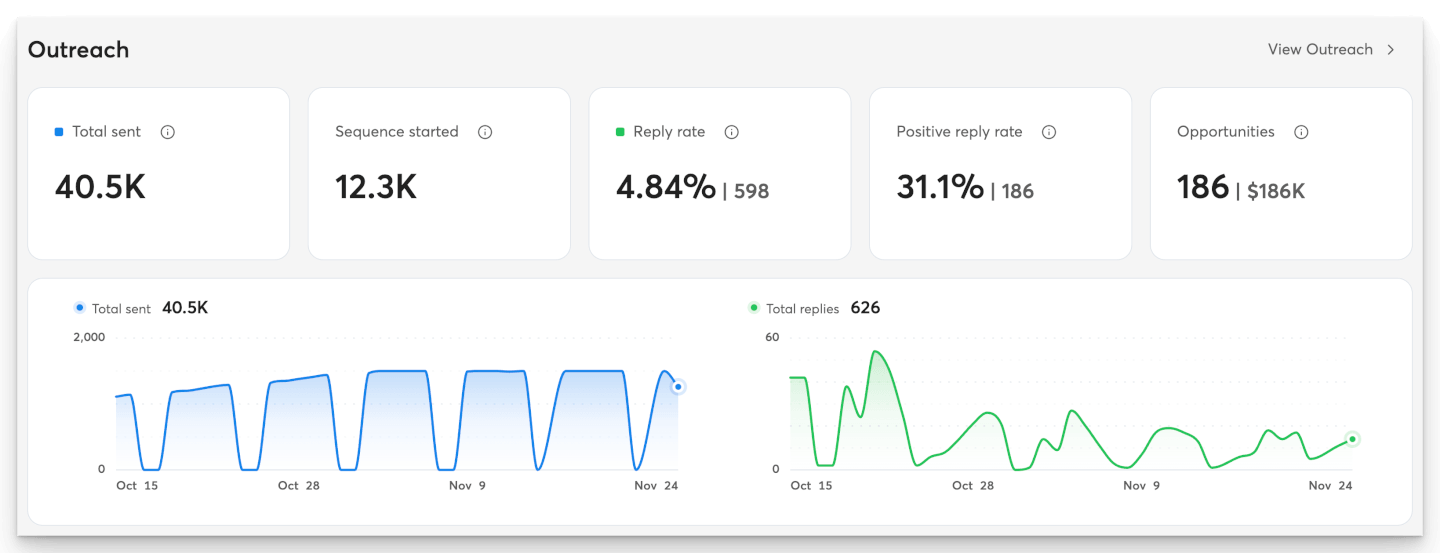
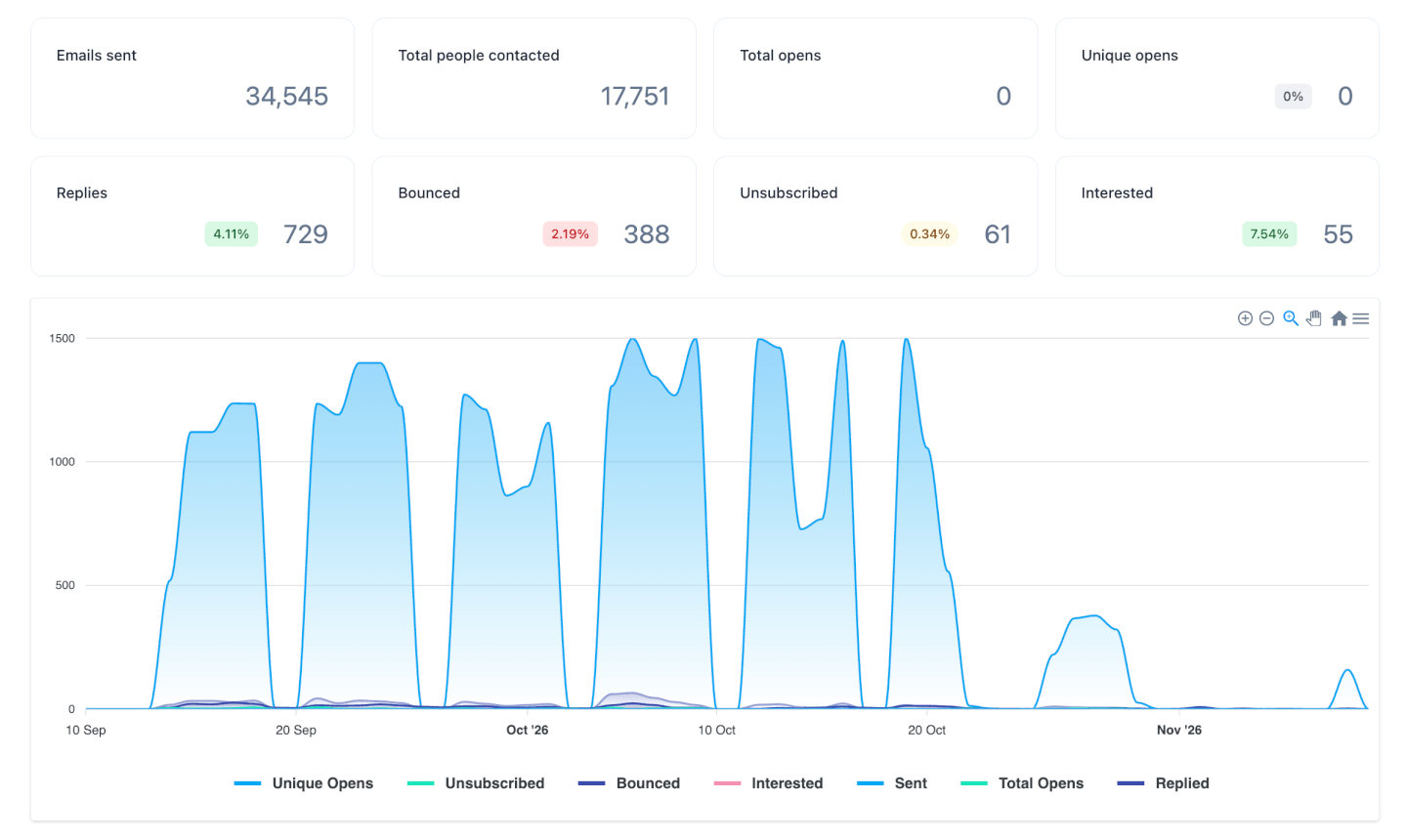
- Emails sent: 39,129
- Business owners contacted: 12,349
- Genuine replies: 413 (3.34% reply rate)
- Interviews booked: 23, with 13 already completed
- Bounce rate: 0.93%
Instantly separates out-of-office notices and other automated responses from real replies. The 170 automated responses the campaigns drew are excluded from the reply count. Across the whole program, 1 in 73 owners contacted became an opportunity.
Veteran segment versus the control segments
The veteran campaign replied at 7.75% and produced 152 opportunities, 90% of the pipeline from 36% of the volume. Home services and trades owners replied at 0.85%, and financial and professional services owners at 0.82%, with the same offer. In the veteran segment, 1 in 29 owners contacted became an opportunity.
All 23 booked interviews came from the veteran segment.
What the tests showed
Each campaign opened with nine first-email variants: three subject lines crossed with three body angles, with equal sends per variant. In the veteran segment, the three bodies were a USA Wire feature, a Stellar Business award, and a question about the owner's own service.
The feature article and the service question each produced 59 opportunities, against 33 for the award. One opportunity could not be matched to a first email and is left out of that breakdown.
The best single first email paired a subject line of the owner's first name plus 'interview request' with the USA Wire opener. It produced 28 opportunities from 497 sends, or 1 in 18. The two specific subject lines, 'veteran-owned?' and the interview request line, beat 'quick question' by roughly a third.
Follow-ups mattered. Of the 152 veteran opportunities, 58 (38%) came from a reply to a follow-up, and 41 of those came from the second email, a single line asking whether the first note had landed. Every follow-up threaded under the original email, four days apart.
Infrastructure and list decisions
The program ran on 65 mailboxes across 22 domains, all warmed and monitored in Instantly. Sending ramped in stages over the first three weeks, from the longest-warmed mailboxes at launch to full volume in early November. Emails went out as plain text with open and link tracking switched off to protect inbox placement.
Thirty-seven percent of the veteran owners contacted list a personal Gmail, Yahoo or AOL address instead of a company domain, which is common for small owner-operated businesses. The commercial lists were cleaned of captive insurance agents and franchisees before upload, since those owners usually cannot place press about their business without corporate approval.
Business impact and what comes next
Veteran-segment interest came from owners across five service branches and 20 states, and 49 of them run service-disabled veteran-owned businesses. The opportunities span professional services, trades, hospitality and real estate.
By October 28, Mike had about 5 feature articles in production from the interviews, with more interviews scheduled. By the first week of November, a first batch was written and ready to publish on USA Wire.
The client has not reported any closed revenue yet. More than 4,000 loaded veteran-owned businesses remain to be contacted, and all three campaigns are still sending.
Past results do not guarantee future results. Individual outcomes vary based on industry, offer, and implementation.