
Campaign Overview
Source1 Parcel is a parcel shipping rate negotiation firm that helps mid-market U.S. businesses reduce their FedEx, UPS, and DHL spend by analyzing existing carrier contracts and negotiating market-rate agreements on their behalf. The company operates on a gain-share pricing model: clients pay nothing unless real savings are realized, with Source1's fee calculated as a percentage of those ongoing monthly savings. Their typical customer is a U.S. manufacturer or e-commerce company with $1M to $5M in annual parcel spend whose finance team suspects they are overpaying but lacks the in-house expertise to renegotiate carrier contracts at scale.
Source1 Parcel partnered with Lead Gen Jay to build an outbound pipeline targeting CFOs, Controllers, and VPs of Finance at mid-market U.S. manufacturers and e-commerce companies. The challenge was deceptively narrow. Most businesses do not track their parcel spend tightly enough to know whether they are overpaying, and the ones that do are guarded by finance leaders who get pitched constantly. Reaching companies with enough volume to justify the gain-share model required defensible, opinionated targeting that ruled out carriers, freight forwarders, 3PLs, and platform-dependent sellers who could never benefit from the offer.
The campaign detailed in this case study was not the first attempt. Earlier sequences had tested three positioning angles in parallel across a broad list, and the results exposed a foundational targeting problem. What followed was a disciplined strategic pivot that ultimately produced 57 qualified opportunities from a single relaunch campaign.
The Strategic Pivot: From Broad Targeting to a Single Winning Playbook
Earlier sequences tested three positioning angles in parallel: a no-risk pay-for-performance guarantee, contract complexity simplification, and market rate benchmarking. The premise was sound. Explore which message resonated, then double down on the winner. In practice, two of the three angles produced almost no positive replies across more than 40,000 emails, and the third (direct rate negotiation framing) was clearly the winner but was being diluted by a list that included too many shipping-adjacent companies who were never going to buy.
A list audit revealed that only 26% of contacts in the live campaign matched the actual ICP. The team rebuilt the targeting in Apollo and Clay around a tighter definition: U.S. manufacturers and retailers in the $20M to $500M revenue band, targeting CFO, Controller, and VP of Finance titles, with explicit exclusion of carriers, freight forwarders, 3PLs, and Shopify-based sellers who outsource fulfillment. At the same time, the two underperforming angles were retired and all sending capacity was committed to the rate negotiation framing.
Source1 Parcel's principals, Brian and Scott, stayed engaged through every stage of the list rebuild, providing detailed feedback on which industries to remove (including transportation, logistics, wellness, and utilities) and which company profiles mirrored their best existing customers. That collaboration made the precision targeting defensible. The team was tuning to the client's real-world experience of which leads converted, not demographic guesses.
The relaunch campaign on the refined list, with focused messaging, changed the trajectory of engagement entirely. The same product, the same fundamental offer, but a list that actually matched the buyer and a message that spoke directly to their problem.
Key Metrics
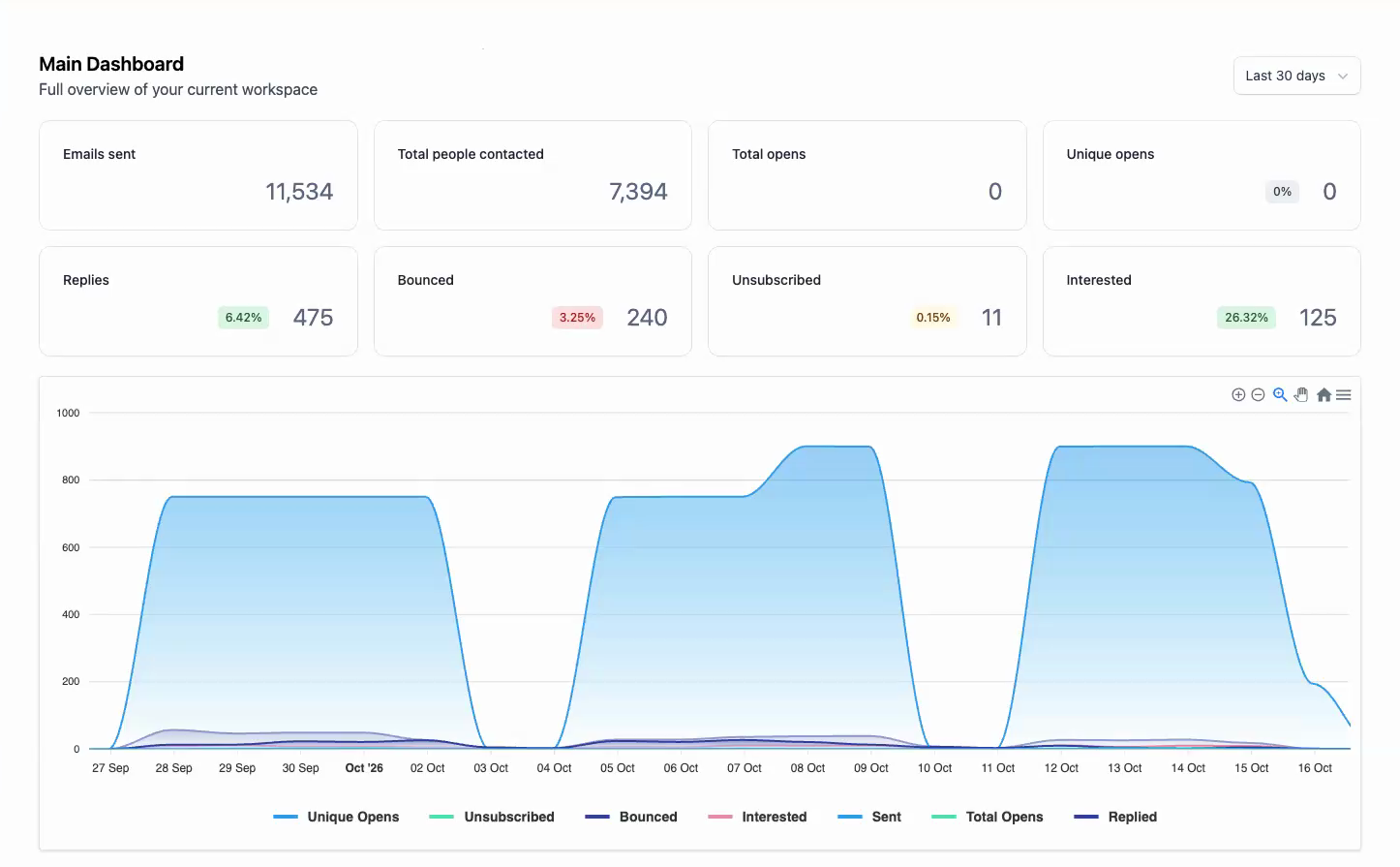
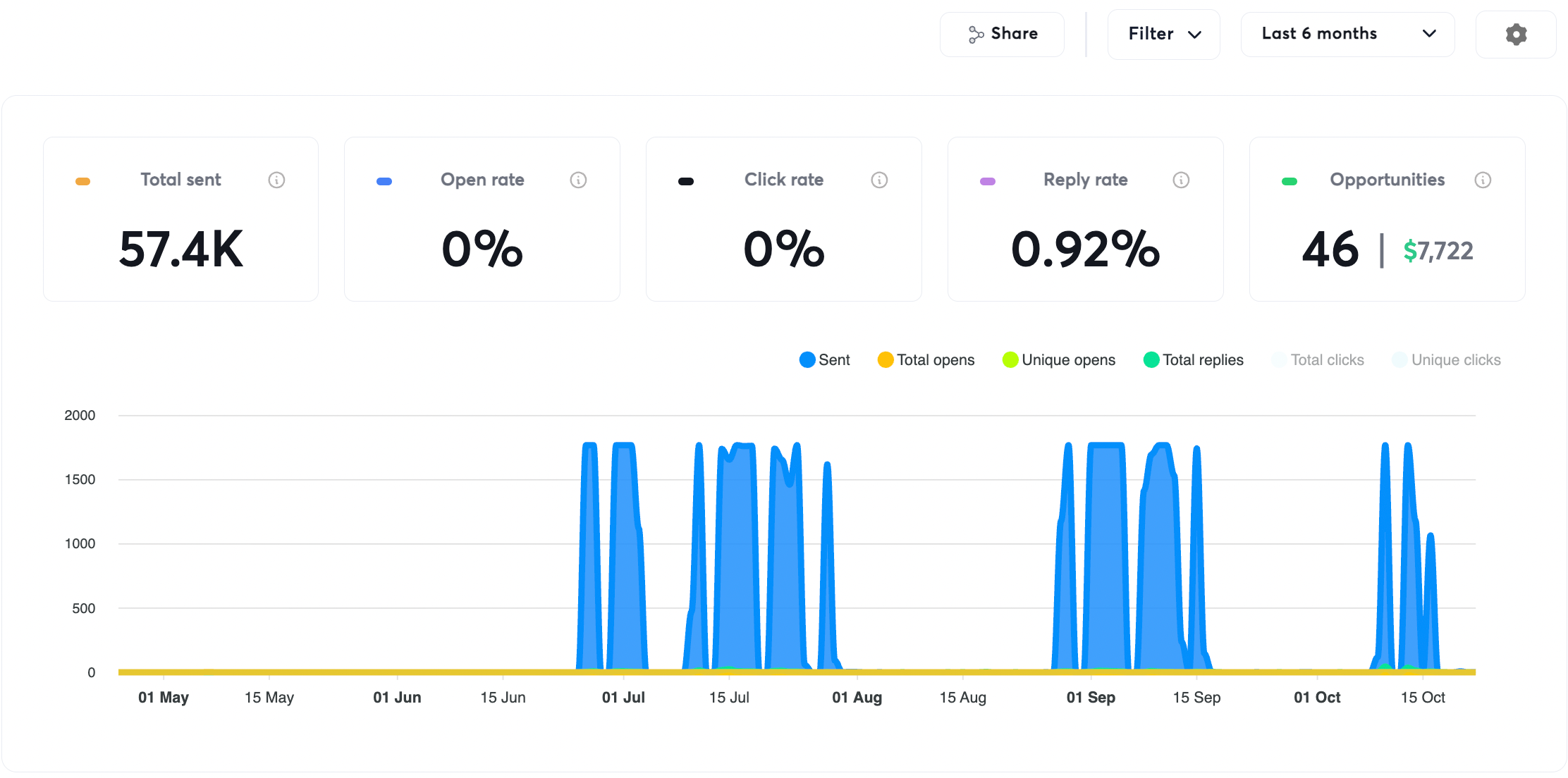
- Total Emails Sent: 38,647
- Senior Finance Leaders in Sequence: 13,279
- Leads Completing Full Sequence: 12,689
- Qualified Opportunities Generated: 57
- Positive Conversion of Replies: 25%
Of the buyers who replied, one in four were qualified opportunities, confirming that the refined targeting and the rate negotiation framing were aligned with how mid-market manufacturers and e-commerce companies think about parcel spend. The 57 opportunities represent CFOs, Controllers, and VPs of Finance who actively engaged on a Source1 parcel-rate analysis.
Best-Performing Campaign
The relaunch campaign was built around a single Instantly cold email sequence using direct rate-negotiation framing, sent to a precision-built list of senior finance decision-makers at U.S. manufacturers and e-commerce companies in the $20M to $500M revenue band. The list was constructed in Apollo and Clay with explicit exclusion of carriers, freight forwarders, 3PLs, and Shopify-based sellers who outsource fulfillment, three categories that look like fits on paper but would never benefit from Source1's gain-share model in practice.
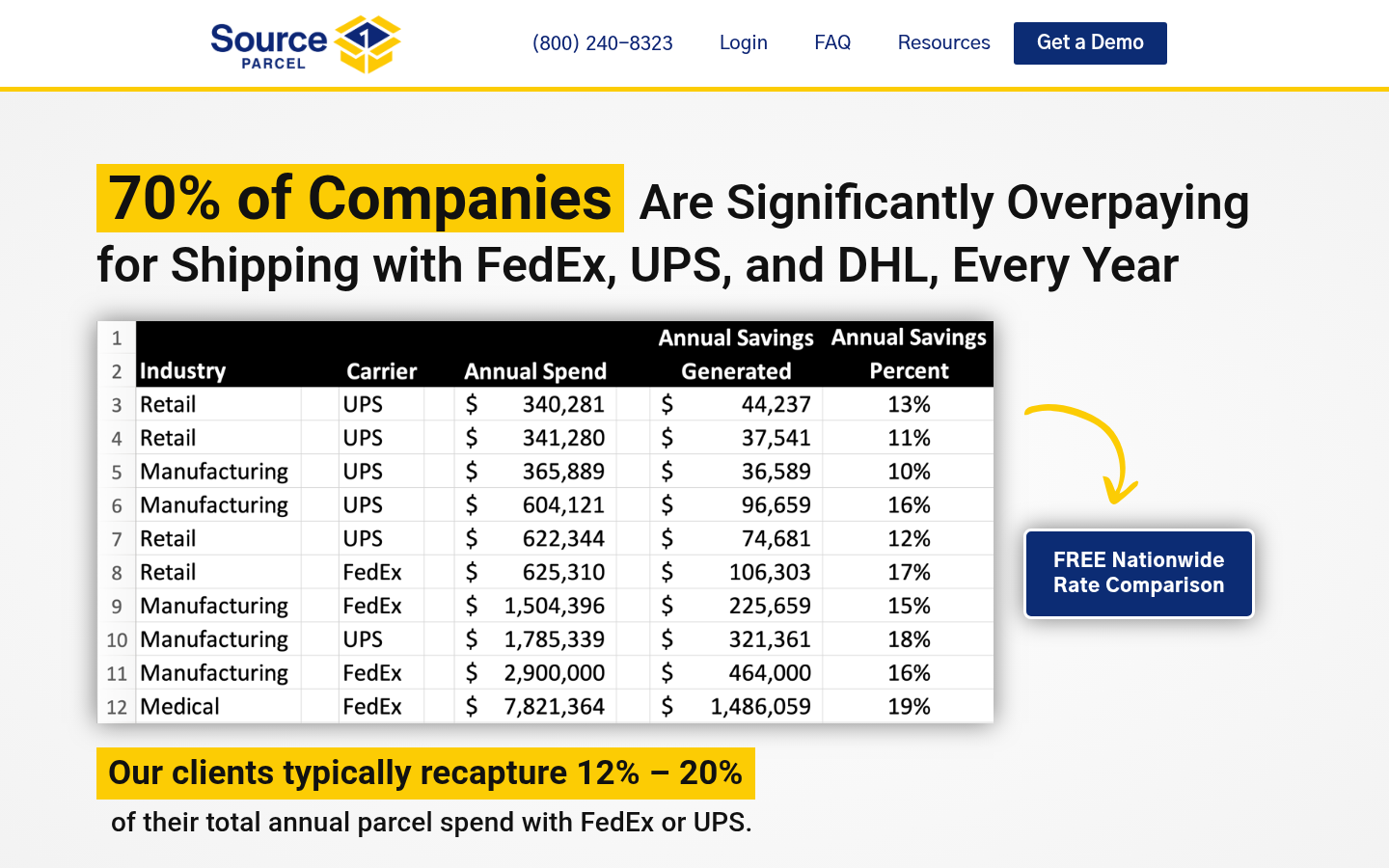
The sequence opened on the specific pain of overpaying on FedEx and UPS contracts, anchored credibility on a reference savings example ($325,000 in annual savings on $1.6M in parcel spend), and offered a free analysis as a low-friction next step. Sender infrastructure was deployed across multiple warmed domains under the Source1 Parcel and ParcelRatePro brands, with sending paced to maintain healthy inbox placement throughout the run.
Earlier multi-angle testing was not a failure. It was diagnostic. By committing real volume to three distinct angles, the team learned definitively that the direct rate-negotiation framing was the only one that converted at scale. Killing the underperforming angles freed up sending capacity and let the relaunch run a single proven message rather than splitting attention across three approaches.
Success Factors
Disciplined Angle Selection
The willingness to kill two underperforming angles and concentrate entirely on the rate-negotiation framing was a decisive factor in the relaunch's performance. Rather than continuing to split sending capacity across messages that were not converting, the team committed to the one angle that data had validated. This freed up volume and allowed the winning message to run at full scale against the right audience.
ICP Audit and Rebuild
The single largest performance unlock came from auditing the live lead list against the actual ICP and discovering that nearly three-quarters of contacts did not fit. Rebuilding the list around U.S. manufacturers and e-commerce companies in the $20M to $500M revenue band, with finance-leader titles and explicit exclusions, gave the campaign a base of prospects who could realistically benefit from Source1's gain-share model. Targeting was the leverage point, not copy.
Client Collaboration on Targeting Criteria
Brian and Scott stayed engaged through every list rebuild, providing detailed feedback on which industries to remove, which revenue and employee bands to favor, and which company profiles mirrored their best existing customers. That collaboration is what made the precision targeting defensible. The team was tuning to the client's real-world experience of which leads were good, not just to demographic assumptions.
A Look-Alike Playbook for Continued Expansion
Once the relaunch validated the model, the team built a repeatable look-alike expansion process: identify the firmographic profile of accounts that had already replied positively, then build precision-targeted micro-campaigns mirroring those profiles by decision-maker role across CFO, COO, and CEO. This converts an ad-hoc list-building exercise into a system Source1 can continue to run against new tranches of look-alikes as the market expands.
Conclusion
The Source1 Parcel relaunch is a study in the value of disciplined iteration. The initial multi-angle, broad-list approach did not produce the results the team or the client hoped for. Rather than attribute the shortfall to copy, deliverability, or market conditions, the team did the harder work: audited the list, killed the angles that were not converting, and rebuilt the targeting around the buyer who actually needed the product.
The result was 57 qualified opportunities from a single relaunch campaign of 38,647 emails, with one in four of every replying buyer turning into a qualified opportunity. The 57 opportunities represent meaningful pipeline value under Source1's gain-share model. A single closed customer in Source1's own case-study materials generated $325,000 in annual savings on $1.6M in parcel spend, with Source1's revenue tied to a percentage of those ongoing savings. Even modest close rates against the 57 opportunities translate into a multi-year recurring revenue stream.
Beyond the immediate pipeline, the campaign produced something more durable: a validated ICP, a validated angle, and a list-building playbook the client can keep running. The team now knows exactly which company profiles, which titles, and which messaging combinations produce conversations with prospects who actually have a parcel-spend problem worth solving. That intelligence is portable across future campaigns and compounds over time.
The lesson the Source1 Parcel campaign proves out is one that holds across cold email broadly: the message only works when the list is right, and the list is only right when somebody is willing to audit it honestly and rebuild it from scratch when the data says it is not working.
Past results do not guarantee future results. Individual outcomes vary based on industry, offer, and implementation.